Polish service provider Omni3D markets industrial 3D printing for railway operators, defence contractors and industrial OEMs. It points to EN 45545-2 fire, smoke and toxicity compliance for rail parts, AQAP 2110:2016 certification and an NCAGE listing for defence work. The offer covers design support, low-volume production and digital part records for legacy fleets.
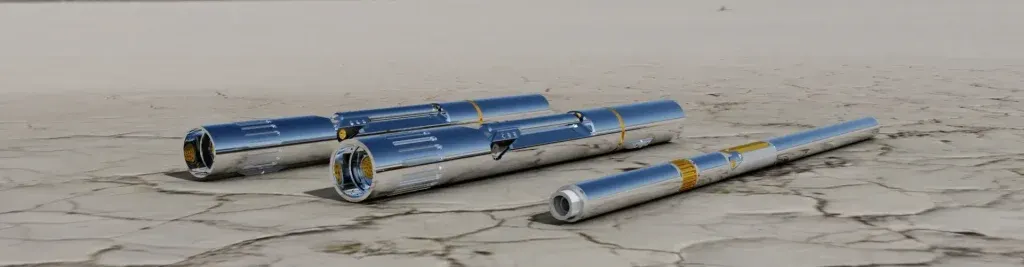
Omni3D describes a project with Avalon Sciences, a British maker of borehole seismic tools, on a thermal barrier for downhole use above 200 °C. PEEK had proved hard to print on Avalon's own machine, so Omni3D proposed a higher-temperature printer and a separate PEKK-A route. The case shows that material choice, machine capability and part testing must be settled together.
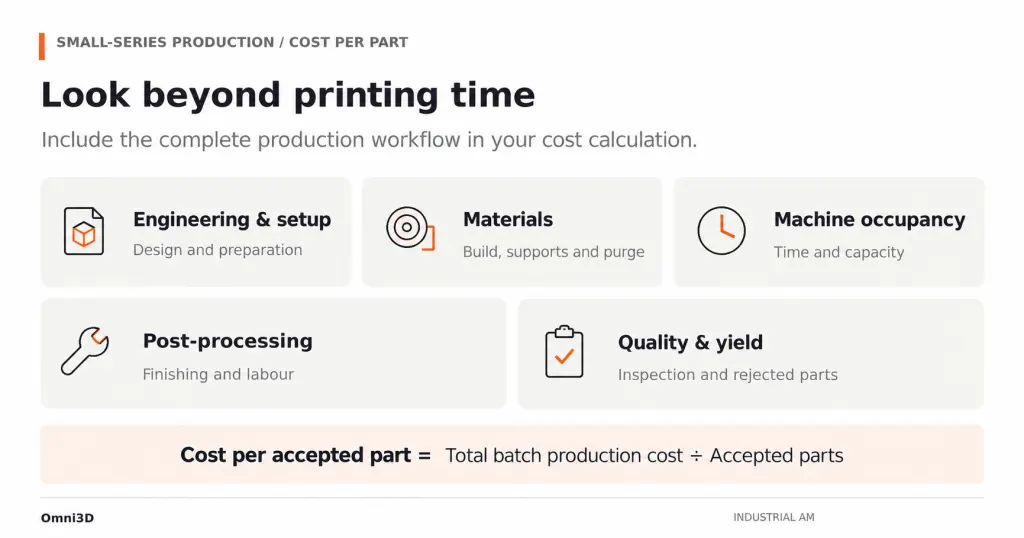
Omni3D, a Polish maker of FFF and metal LPBF systems, has published a guide to lowering cost per part in small-series additive production, ahead of its IMTS 2026 appearance in Chicago. The core advice is to measure cost and throughput per accepted part across the whole workflow, not per build. The text also covers flow limits, supports, qualification and trial design.
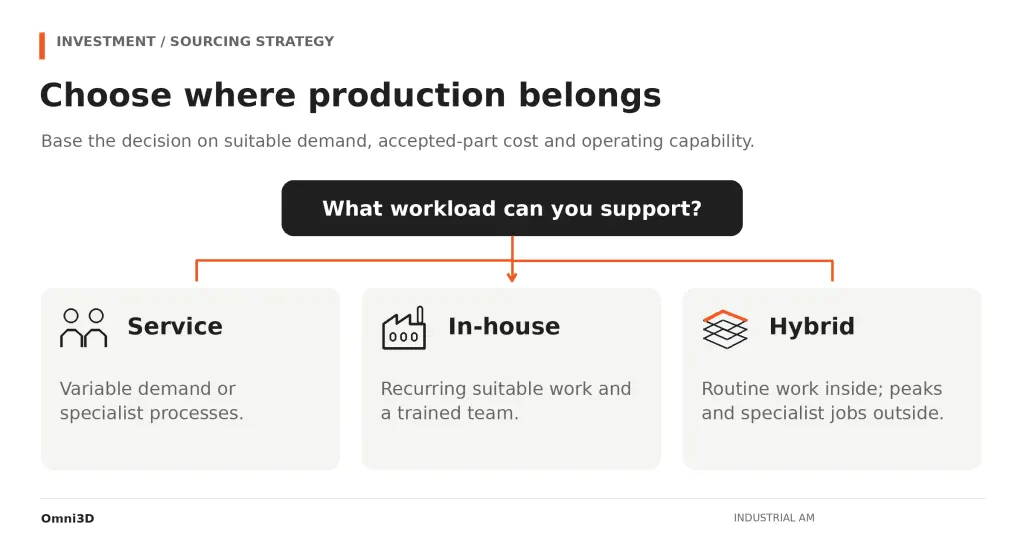
Omni3D, a Polish maker of industrial printers, has published a guide on when a manufacturer should move 3D printing from service providers to its own plant. It names five signals, compares outsourced, in-house and hybrid routes, and offers a simple break-even formula based on accepted parts. The guide comes from an equipment vendor and also points to its own systems.
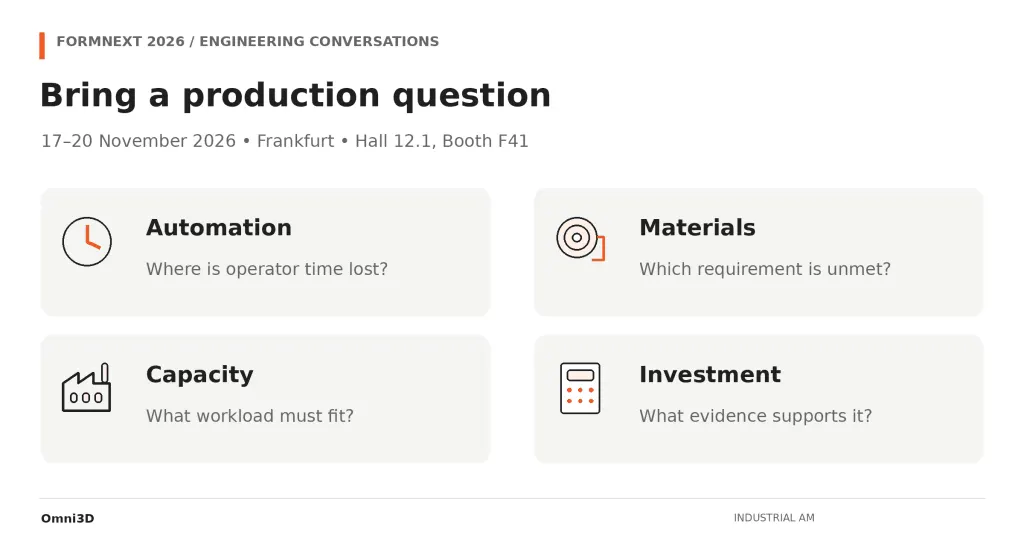
Omni3D will exhibit at Formnext in Frankfurt from 17 to 20 November 2026, in Hall 12.1, Booth F41. The Polish company frames the visit around four planning questions on automation, materials, capacity and proof of value, and asks visitors to arrive with one concrete manufacturing challenge.
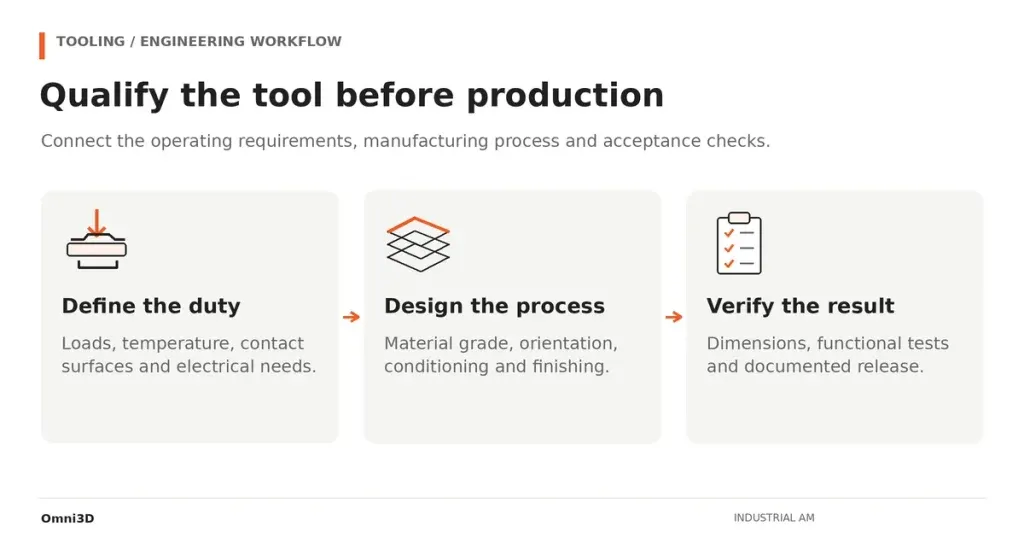
Omni3D has published a five-step guide to designing polymer jigs and fixtures for industrial FFF. It covers working conditions, load path and orientation, material and thermal control, replaceable contact interfaces and ESD qualification. The guide stresses that datasheets only screen candidates and that acceptance tests should come from the real manufacturing operation.
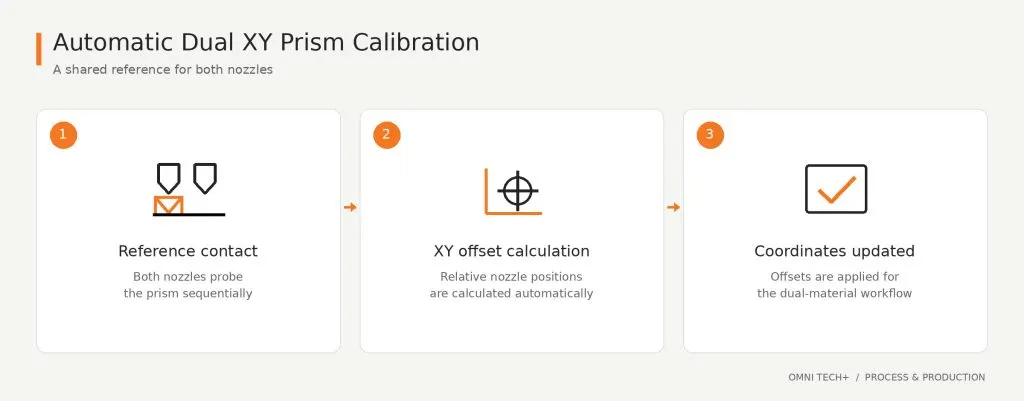
Omni3D describes how the Omni TECH+ aligns its two nozzles automatically with a prism reference, replacing printed test patterns and manual offset entry. The maker states that preparation per job falls from 45 minutes to under 3 minutes. The figures come from the vendor and have not been independently checked.