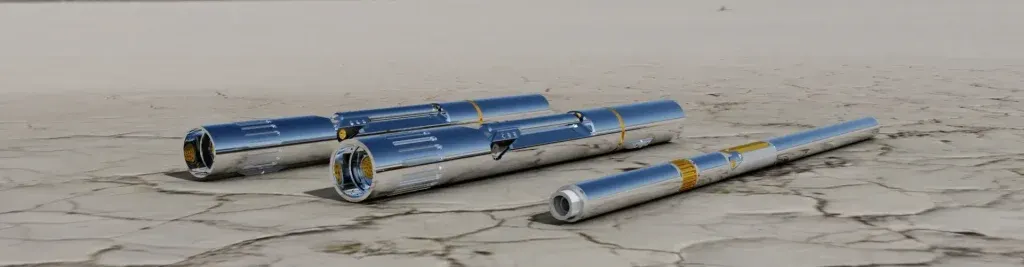
Omni3D describes a project with Avalon Sciences, a British maker of borehole seismic tools, on a thermal barrier for downhole use above 200 °C. PEEK had proved hard to print on Avalon's own machine, so Omni3D proposed a higher-temperature printer and a separate PEKK-A route. The case shows that material choice, machine capability and part testing must be settled together.
Key facts
Application: downhole thermal barrier for tools above 200 °C
Original material PEEK; PEKK-A evaluated as separate alternative
Quotation of 3 April 2024: one GSR-38 part, Kimya PEKK-A, Omni PRO
Maximum completion time two weeks after acceptance
Context PEEK and PEKK both belong to the polyaryletherketone family of high-temperature thermoplastics, but they are different materials, so one cannot simply replace the other.
What problem did Avalon bring to Omni3D?
Avalon Sciences needed a thermal barrier for downhole tools that run in conditions above 200 °C. The specified material was PEEK. Earlier attempts to produce the part on Avalon's Factory 2.0 printer had been difficult, so the company sought advice on a workable printing route.
Which routes did Omni3D propose?
For PEEK, Omni3D pointed to its Omni PRO HT, arguing that the machine must fit the polymer's processing demands rather than treating printers as interchangeable. In parallel it offered PEKK as an alternative to evaluate, noting that grade, process and operating conditions decide whether one polymer can stand in for the other.
What did the PEKK-A quotation cover?
A quotation dated 3 April 2024 covered one GSR-38 component in Kimya PEKK-A on the Omni PRO, with a maximum completion time of two weeks after acceptance. The same material was specified for the supports, so support access and removal were part of the plan. These terms apply only to that quoted build.
What comes after the build?
A successful print only allows the part to be assessed. Fit in the tool assembly, the effect of removing supports and behaviour under the relevant temperatures still have to be checked against the application requirements.
What it means
For small manufacturers, the case is a reminder that a datasheet polymer name is not a qualified part. A material switch from PEEK to PEKK-A means new evidence for the application, which adds test effort and cost. Outsourcing a single trial build can be cheaper than changing in-house equipment, and a two-week quoted lead time suits low-volume work. No performance results are published here, so the route remains unproven for service.
Frequently asked questions
Why was the PEEK part hard to make for Avalon?
Earlier attempts on Avalon's Factory 2.0 printer had proved difficult. Omni3D suggested the Omni PRO HT, matched to the polymer's processing demands.
Is PEKK-A a drop-in replacement for PEEK?
No. Omni3D stresses they are distinct materials, so grade, process and operating conditions must be assessed separately.
What was quoted for the PEKK-A route?
One GSR-38 component in Kimya PEKK-A, supports in the same material, finished within two weeks of acceptance.