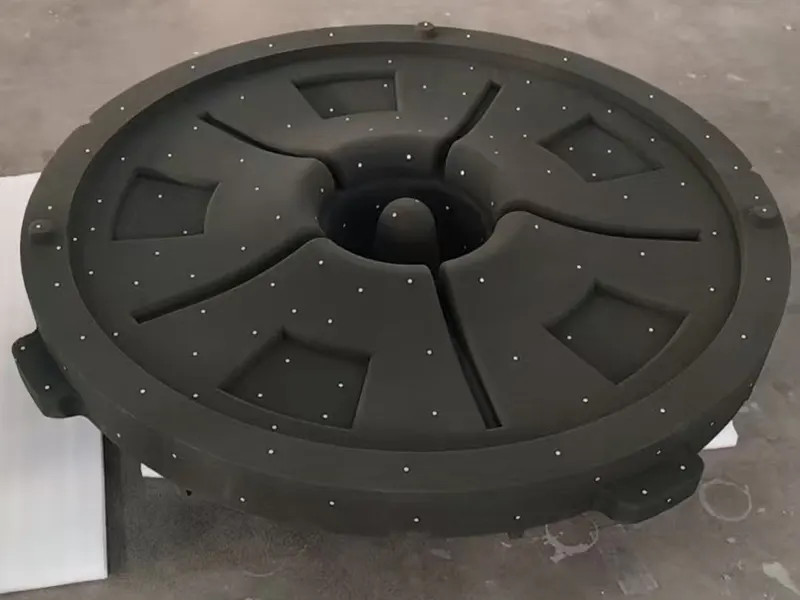
A Chinese sand mould printing supplier has published a materials guide that works backwards from the casting metal to the sand, binder and hardener. It covers four sands, three binder systems, seasonal hardener settings and recycling, and warns that every figure is a starting point to be checked on the user's own casting and workshop.
Key facts
Silica sand 70/140 mesh covers about 90% of uses
Ceramic, zircon and chromite sand serve as facing sand
Hardener runs 20 to 40% of resin weight
Reclamation reaches 80 to 95% reuse and can halve material cost
Context Loss on ignition measures how much residual resin remains in reclaimed sand after thermal treatment.
Which sand for which casting?
Silica sand is the default and cheapest. Ceramic sand gives better flow and lower thermal expansion at three to six times the price. Zircon and chromite are used only as facing sand on thick steel castings. Layer thickness should be at least 1.5 times the largest grain size, and acid demand must be retested whenever the sand source changes.
Binder and hardener choices
Furan resin suits iron and non-ferrous castings but produces gas and fumes. Phenolic resin suits steel. Inorganic binders emit almost no VOC but need curing ovens and give lower green strength. Resin and hardener should come from one supplier. Reaction speed roughly doubles per 10 degrees Celsius, so summer and winter need separate settings.
Cost and reclamation
The cost gap lies in reclamation. With mechanical and thermal reclamation, 80 to 95% of used sand is reused and material cost per tonne of moulds can fall by more than half. Loss on ignition is the key control value for reclaimed sand.
What it means
For foundries weighing sand mould printing, the guide shows that material choice and process control, not the printer, drive cost and scrap. The practical lessons are incoming sand testing, seasonal process sheets and a reclamation system budgeted alongside the machine. Treat the figures as starting values: the publisher is a printer vendor, and the guide itself says first castings must be poured and sectioned. Environmental permitting may favour inorganic binders despite their process penalties.
Frequently asked questions
Which sand is used most in 3D printed sand moulds?
Silica sand at 70/140 or 100/140 mesh covers about 90% of cases. Ceramic sand is used for complex or high-precision parts, and zircon or chromite as facing sand for steel.
Can resin and hardener from different suppliers be mixed?
No. They are designed as a pair, and mixing can produce moulds that seem cured but collapse at pouring. Change the whole set and revalidate.