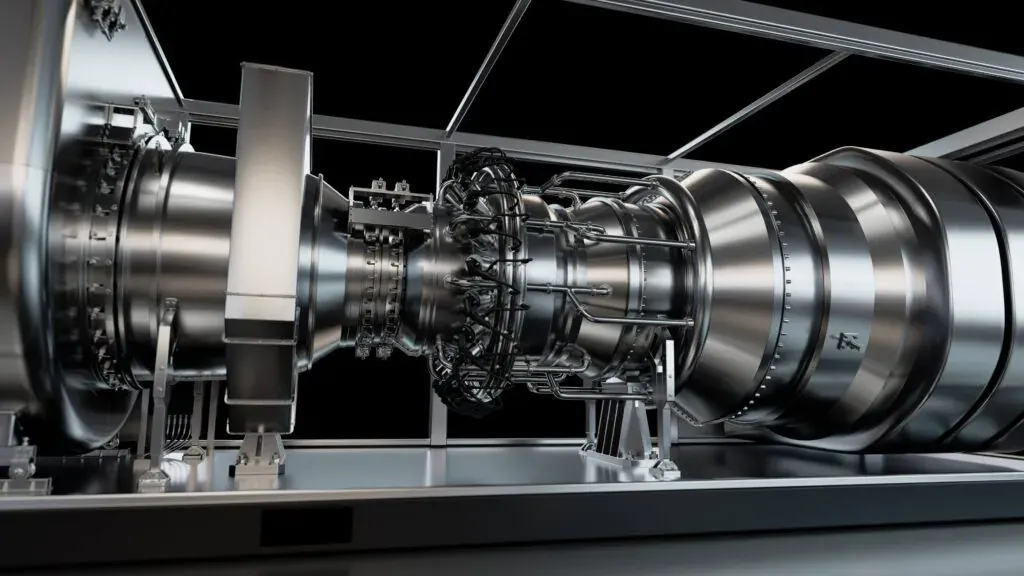
Boom Supersonic has ordered three Lithoz CeraFab S65 ceramic printers to make casting cores for the single crystal turbine blades of its Superpower industrial gas turbine. The company chose lithography-based ceramic manufacturing after a series of prototypes from Lithoz. The order adds to rising demand from aero engine makers for ceramic AM.
What Boom Supersonic ordered and why
Boom Supersonic, based in Colorado and developing the Overture supersonic airliner, bought three CeraFab S65 industrial printers from Lithoz of Vienna. They will develop and build ceramic casting cores with complex channels and branched cavities. These cores are needed for single crystal turbine blades that withstand the extreme inlet temperatures of the Superpower, an aeroderivative industrial gas turbine derived from supersonic turbofan technology.
Lithography-based Ceramic Manufacturing (LCM) was selected as a key technology to create and industrially scale these cores, and for Boom's in-house turbine blade production.
Selection and prior AM use at Boom
Chief Engineer Nick Sheryka said Lithoz won the decision through its support in delivering a series of prototypes, and that LCM gave repeatable, reliable results. Boom has already used Stratasys FDM for prototyping, tooling and cabin parts, and VELO3D metal powder bed fusion for components on its XB-1 demonstrator.
Demand signals for ceramic AM
Lithoz describes the order as the latest in a series of signals from aerospace players working on next generation engines. It recently reported a 40% year-on-year rise in material sales, driven mainly by silica-based materials, from existing OEM customers and a few unnamed contract manufacturers.
What it means
For manufacturers considering ceramic AM, the order shows that casting cores are moving from prototype work toward in-house series production at an engine developer. Buying three machines points to a volume and repeatability case, not a one-off trial. Smaller firms in investment casting should note that qualification rested on prototype series and repeatability, and that the supplier's support counted in the decision. It also follows Lithoz's recent CeraFab S65 projection retrofit story, which concerned the same printer platform.
Frequently asked questions
What will Boom Supersonic print with the Lithoz machines?
Ceramic casting cores with complex channels and branched cavities, used to cast single crystal turbine blades for the Superpower industrial gas turbine.
Which Lithoz printer and process were ordered?
Three CeraFab S65 industrial printers using Lithography-based Ceramic Manufacturing (LCM).
Why did Boom choose LCM?
According to Boom's chief engineer, Lithoz's support during a prototype series and the repeatable, reliable results of LCM decided it.