AddiWire

Additive manufacturing news, prices in the EU and the USA, and independent expert commentary

Aerospace and defence

re:3D pitches containerised plastic recycling and printing for field-made military parts

Published 1 sourceSummary written with AIDeutsche Version
re:3D pitches containerised plastic recycling and printing for field-made military parts
Image: re:3D

Austin-based re:3D is developing a deployable unit, the GigaLab, that shreds, dries and prints waste plastic into tools, fixtures and drone brackets. An Air Force Special Operations Command wing has tested it in a shipping container. The aim is to let units in remote places make simple parts on site instead of waiting for shipments.

Key facts
  • GigaLab combines grinding, drying and large-format printing in one container
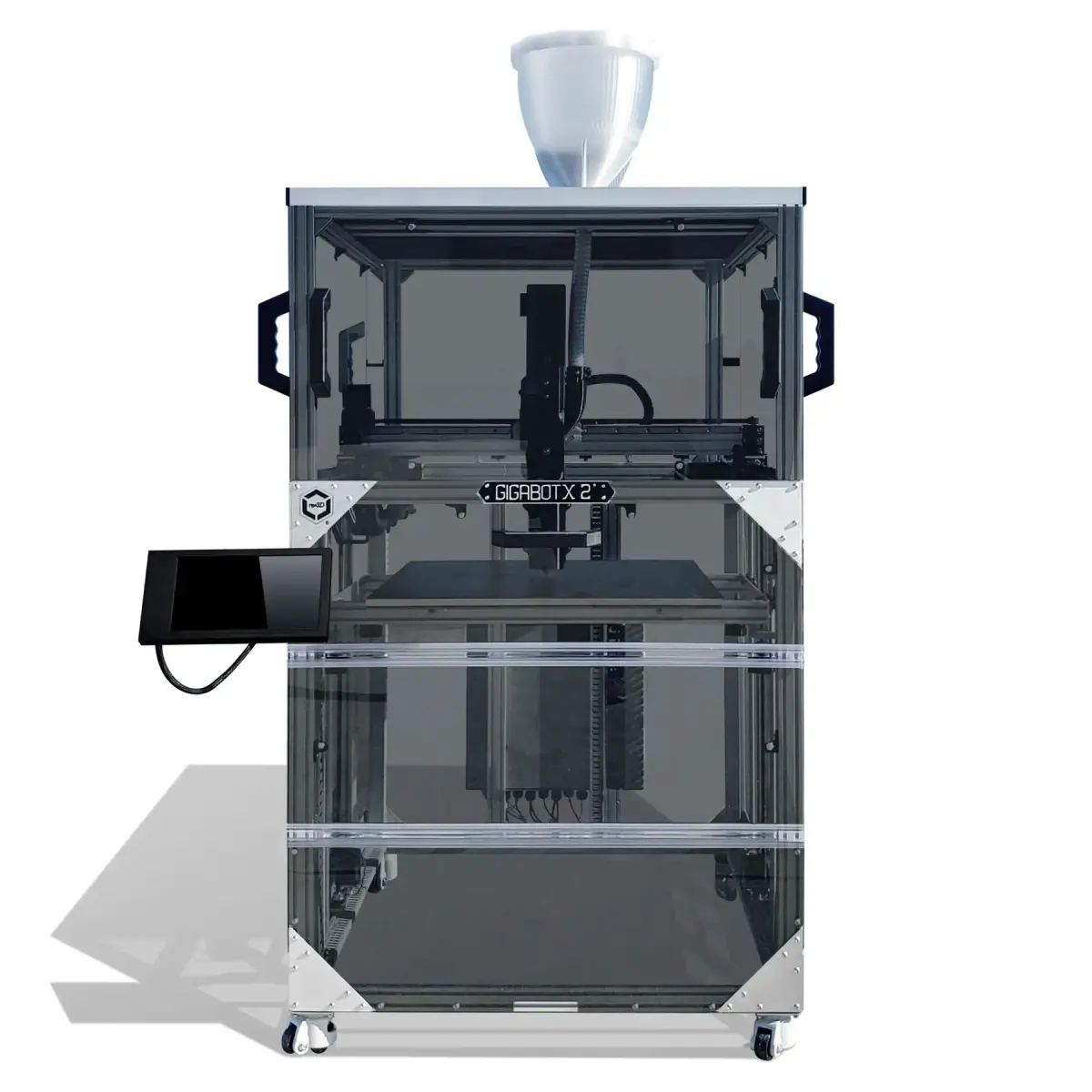
  • GigabotX 2 prints from pellets using fused granulate fabrication
  • An Air Force Special Operations Command wing tested the unit
  • Houston Community College had 12 students pilot a certification exam

Context Fused granulate fabrication (FGF) is an extrusion process that feeds plastic pellets or ground material straight into the print head, with no filament step in between.

How does the GigaLab turn waste into parts?

The GigaLab puts a recycling line and a large-format printer into one deployable container. Plastic waste is ground, dried and then printed on the GigabotX 2, which uses fused granulate fabrication and so works from pellets instead of filament spools. According to re:3D engineer Patrick Ferrell, as relayed by America Makes, this opens the door to recycled and flexible plastics that are hard to convert into filament.

Used water bottles are one example of feedstock. Possible outputs include tools, fixtures, drone brackets and temporary replacement parts. The unit can run off-grid.

What has the Air Force done with it?

Personnel at an Air Force Special Operations Command wing tested a GigaLab in a shipping container to see how discarded plastic could become useful parts in the field. Airmen also held early prototypes of recycled drone frames. The work belongs to a wider push to move manufacturing closer to where equipment is used.

Open questions remain: how well recycled material is processed, whether parts meet quality standards, and which components may be made this way at all. Not every military part can be printed.

What is re:3D doing on training?

re:3D took part in the America Makes Train-the-Trainer workshop, which spreads the Additive Edge curriculum and microlearning material. The company also linked educational organisations to the AMNation Pipeline Portal: Brookwood in Georgetown, Seabrook Intermediate Science Magnet School, and Houston Community College, where 12 students tried out an industry certification exam. Co-founder Samantha Snabes, who has a military background, sees educator training as a base for wider AM adoption.

What it means

For small and mid-sized manufacturers, the lesson is the economics of low-risk parts. Pellet-fed printing sidesteps filament cost, and recycled feedstock may cut material spend, but recycled batches vary, so any buyer would need incoming material checks and a clear list of approved part types. Skills matter as much as hardware, which is why the training track is relevant. This also echoes the earlier story on Printerior's recycled LFAM pellets, and on containerised drone factories sold to the US military: deployable AM is still early and unproven at scale.

Earlier on AddiWire

Frequently asked questions

What is the GigaLab?

It is a deployable container from re:3D that grinds, dries and prints plastic waste with a large-format printer, so units can make tools and simple parts on site.

What can be printed from recycled plastic?

Examples named include tools, fixtures, drone brackets and temporary replacement parts. Not every military part is suitable, and material quality must meet each application.

Who has tested it?

An Air Force Special Operations Command wing tested a GigaLab in a shipping container.

Read the original reports
  1. 3DPrint.com, 24 Nov 2026