What did Northrop Grumman order from AML3D?
AML3D received an initial order worth about USD 2.2 million from Northrop Grumman Marine Systems for a large-scale ARCEMY X system. Northrop Grumman is the fifth US Navy prime contractor to adopt the technology, and AML3D now has contracts for 17 ARCEMY systems in the United States. The customer supplies parts for missile launchers, naval propulsion and power generation, and chose the system for submarine industrial base work.
The machine ships from AML3D's US technology center in Stow, Ohio, to Northrop Grumman's site in Sunnyvale, California. The order includes a two-year maintenance and service package. Half of the payment falls due when the first project milestone is reached, with further milestone payments until final installation, expected in Q4 2027.
How are Australian groups approaching military aircraft repair?
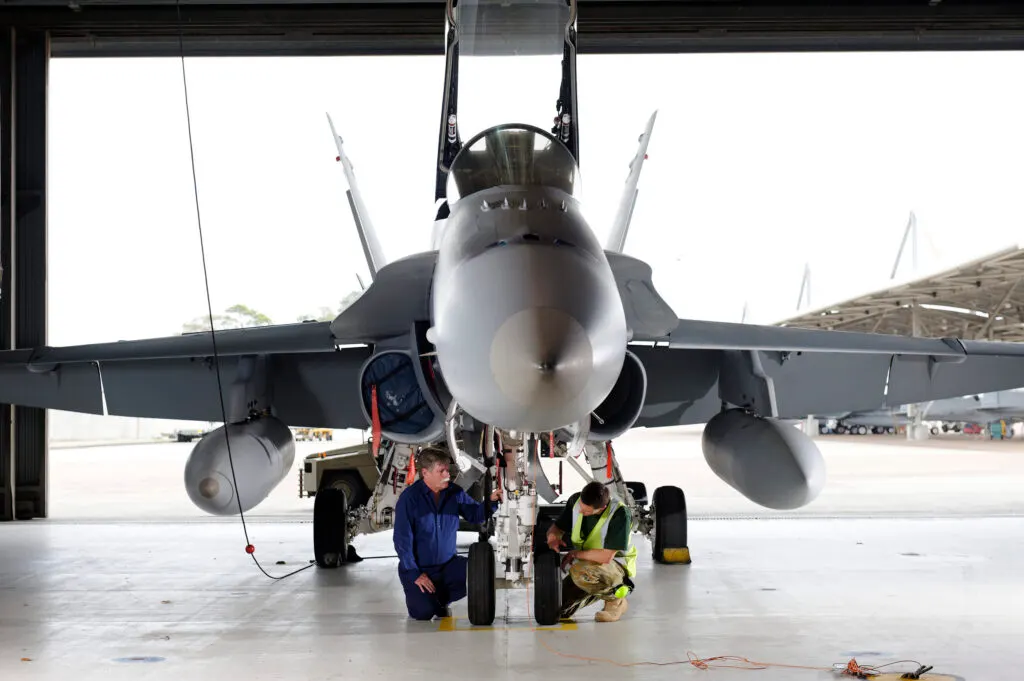
Rosebank Engineering, the RMIT Centre for Additive Manufacturing and Swinburne University of Technology will spend two years developing a certifiable laser directed energy deposition repair process, supported by AMCRC. It targets precipitation-hardening alloys used in military aircraft, such as Inconel, 15-5PH stainless steel and titanium.
A laser rescanning technique is meant to control microstructure and reach the required properties without a heat treatment afterwards, by adjusting heat input locally. The aim is to repair a real military component in line with OEM and NASA-STD-6030 requirements, using Rosebank's AMCLAD monitoring and control system. The partners expect in-country repair to cut cost and lead time compared with long international supply chains.
Who is funding and buying what?
Roboze raised USD 10 million, with Rialto Ventures, which led its Series A, Club degli Investitori and strategic investors from the US, Italy and Singapore. The money goes to US production capacity for qualified end-use parts, hiring across AI, engineering, materials and defence roles, and new material classes such as ceramic matrix composites.
saas.group announced its 27th acquisition, 3D AI Studio, a platform that generates 3D models from images or text prompts. It reports 1.9 million registered creators and over 4 million generated assets, with export options including 3D printing.
What do StandardFlow and the Anycubic deal add?
StandardFlow, a spin-out of WeeklyVentures, offers an AI platform that checks a company's documentation against technical standards and flags gaps such as missing documents or outdated revisions, then produces qualification roadmaps. In a demonstration with a fictional naval bracket and five US military standards it found inconsistencies and conflicting specifications. Its CEO is Michael Molitch-Hou, formerly editor-in-chief of 3DPrint.com.
Anycubic and Thingiverse will give Anycubic users access to more than 2 million models, with selected ones adapted for multicolour printing and converted from STL to 3MF. The collaboration section on Makeronline opens on 17 November 2026.