AddiWire

Additive manufacturing news and European prices, with independent expert commentary

Industrial AM

Low-cost metal LPBF splits into three price tiers as diode lasers and gantries cut cost

Published 1 sourceSummary written with AIDeutsche Version
Low-cost metal LPBF splits into three price tiers as diode lasers and gantries cut cost
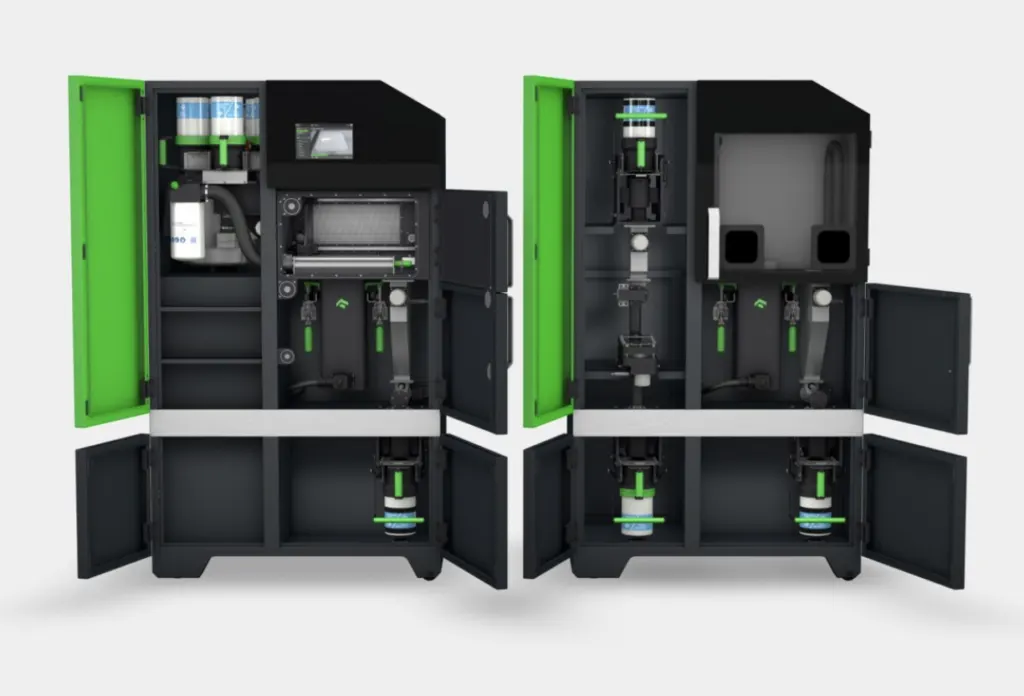
Image: One Click Metal

A 3DPrint.com market overview sorts entry-level metal laser powder bed fusion into three categories: pre-industrial systems at $60,000 to $100,000, desktop dental machines around $40,000, and manual desktop systems at $10,000 to $30,000. The author sees cheaper lasers and simpler motion stages as the drivers pushing prices down.

Key facts
  • Pre-industrial LPBF systems cost $60,000 to $100,000 with 200 to 500 W lasers
  • Dental desktop systems like the Riton MLab cost around $40,000
  • MetalBase and ScrapLabs sell manual desktop systems for $10,000 to $30,000
  • MetalBase uses a 60 W blue diode laser and a CoreXY layout

Context LPBF (laser powder bed fusion) melts thin layers of metal powder with a laser, and a galvo scanner is the fast mirror system that steers the beam across the powder bed.

Which three categories of low-cost metal printers are emerging?

The first tier is pre-industrial systems at $60,000 to $100,000, from vendors such as One Click Metal and Xact Metal. They typically offer 150 x 150 x 150 mm build volumes, 200 to 500 W lasers, canisters and powder-handling peripherals, and print many materials. Startups, for example in the suppressor market, buy them with cash, start production and later add machines or move to larger systems from companies like SLM or EOS.

The second tier is desktop dental systems, such as the Riton MLab with a round 100 x 90 mm build area and a 200 W laser, or FastForm's DeskFab X1. They work with cobalt chrome, handle everything inside the machine and cost around $40,000.

What defines the cheapest desktop systems?

The third tier, with MetalBase and ScrapLabs, costs $10,000 to $30,000 and targets makers, labs, machine shops and inventors. These machines are more manual, compact and open in materials, with 60 to 200 W lasers and 128 x 100 mm build volumes. Some use Klipper-based control and OrcaSlicer, borrowed from desktop material extrusion, while the other tiers use proprietary software, Magics or Netfabb.

Why do lasers and motion stages matter for price?

Xact Metal and One Click Metal use ytterbium fiber lasers, which focus well and need less maintenance but cost more. ScrapLabs and MetalBase use diode lasers, which focus less sharply and have a broader beam but are cheaper and more compact. MetalBase uses a 60 W blue diode laser. The author expects diode lasers to dominate low-cost metal systems, helped by semiconductor and electronics demand and by rare earth supply risks in fiber lasers.

Pre-industrial systems use high-speed galvo scanners, while ScrapLabs chose a belt-driven gantry and MetalBase a CoreXY layout. Gantries cut the purchase price, though they need more parts and assembly. The author considers MetalBase technically best placed, but notes that funding and marketing also decide outcomes.

What risks remain?

Low-cost systems often rely on open-source software not made for this application. The author argues vendors must decide whether to own the software and user experience or partner with specialists, pointing to Bambu's success in desktop polymers. He ties renewed demand to low-cost defence applications, suppressors and reindustrialization.

What it means

For small and mid sized EU manufacturers, sub-$100,000 metal LPBF lowers the entry barrier for pilots, but the purchase price is only part of the business case. Powder handling, safety, post-processing, material qualification and skills still apply, and cheaper tiers may offer less process control and rely on open-source software. Documentation and repeatability matter for series parts, so these machines suit prototyping, tooling and learning first. Claims about future dominance of diode lasers remain the author's opinion, not proven market data.

Earlier on AddiWire

Frequently asked questions

What do low-cost metal LPBF printers cost?

The overview names three tiers: $60,000 to $100,000 for pre-industrial systems, around $40,000 for dental desktop systems, and $10,000 to $30,000 for manual desktop systems.

Why are diode lasers used in the cheapest systems?

Diode lasers are cheaper and more compact than fiber lasers, though they focus worse and have a broader beam. ScrapLabs and MetalBase use them to lower machine cost.

Who buys the cheaper pre-industrial systems?

The author says startups, for example in the suppressor market, buy them with cash and go into production, and increasingly machine shops too.

Read the original reports
  1. 3DPrint.com, 11 Nov 2026