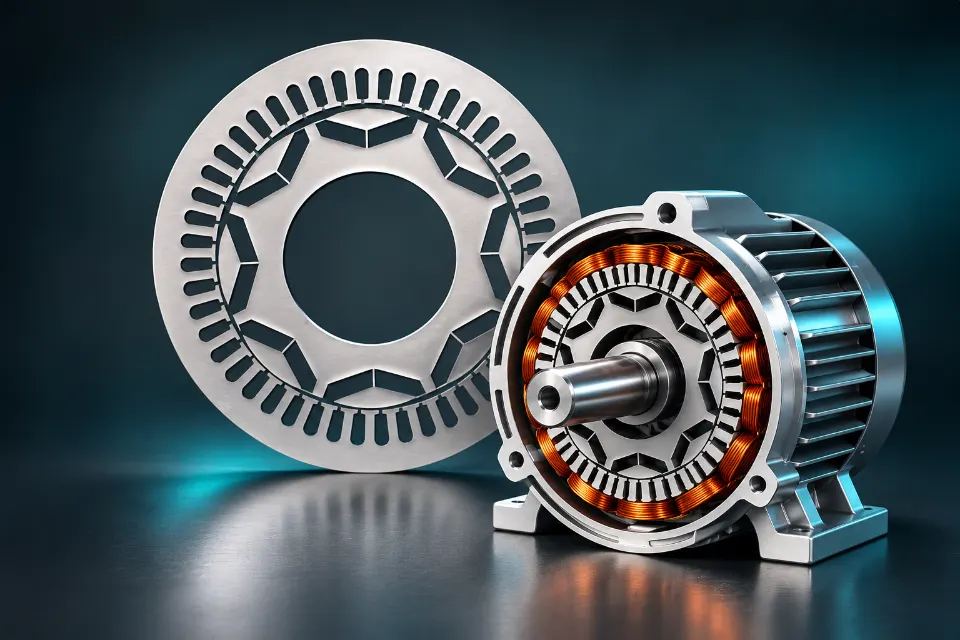
Fraunhofer IFAM in Dresden is setting up a research infrastructure called SIREN for electric motors that need fewer critical raw materials. The project combines powder metallurgy and sinter-based additive manufacturing and receives more than two million euros in funding from Saxony and the EU until the end of 2028.
What does SIREN set out to build?
SIREN is meant to create a continuous sinter-based additive process chain, from material development through complex components to working demonstrators. Unlike conventional methods, it allows different metallic materials to be combined in one part and enables geometries that are hard or impossible to make otherwise. The institute describes this combination of processes as unique in Europe.
Which motor concepts are targeted?
One focus is multi-material laminated stacks that combine soft magnetic and non-magnetic materials. These are intended for motor designs such as high-speed reluctance machines and ferrite-excited permanent magnet drives, which can avoid rare earths. A second approach replaces copper with aluminium in windings and adds cooling channels to improve their properties.
Who funds it and who should benefit?
The money comes from the Saxon science ministry's InfraProNet guideline, financed through the European Regional Development Fund and approved by the Sächsische Aufbaubank. The project also supports the EU STEP platform. IFAM wants to work with drive technology firms, suppliers and sintering companies, and give small and mid-sized companies in Saxony access to the equipment. Target applications include air, land and underwater vehicles.
What it means
For small and mid-sized manufacturers, SIREN is a research offer, not a product: it lowers the entry barrier to multi-material sintered parts through shared infrastructure, but no qualified process or cost per part exists yet. Companies in drive technology and sintering can use the project to test whether aluminium windings or rare-earth-free rotors fit their designs before investing. Realistic timelines run past 2028, when the funding ends.
Frequently asked questions
How much funding does SIREN receive?
More than two million euros until the end of 2028, from the Saxon InfraProNet guideline financed by the European Regional Development Fund.
What materials are meant to be replaced?
The project aims to reduce dependence on rare earths and copper, using rare-earth-free motor designs and aluminium windings with cooling channels.
Who can use the infrastructure?
IFAM seeks cooperation with drive technology firms, suppliers and sintering companies, with small and mid-sized companies in Saxony in particular getting access.