How is a metal AM job prepared?
The work starts with a CAD check of geometry, strength, weight, wall thickness and unsupported spans. The model is then turned into a build file: the part is oriented, supports are planned and process parameters are set. According to the guide, these early choices shape thermal behaviour, warping, surface quality, powder use and the amount of finishing needed later.
Which processes does the guide compare?
The guide treats LPBF, SLM, DMLS and direct metal laser melting as near-synonyms for laser powder bed routes, while EBM uses an electron beam. DED and LMD add material by deposition and can repair or extend large components. Binder jetting and other sinter-based routes print first and densify in a furnace. The term metal SLS is described as common but imprecise.
Where does the business case hold, and where not?
The strongest cases are internal channels, part consolidation, lightweight lattices, custom parts, low-volume spares and repair of valuable components. Limits include rough as-printed surfaces, tolerances that depend on process and feature size, finite build volumes and the need for machining or coating. Machine, consumables, powder handling, safety and trained staff add cost, and in regulated sectors qualification effort can outweigh the print itself.
What happens after the build?
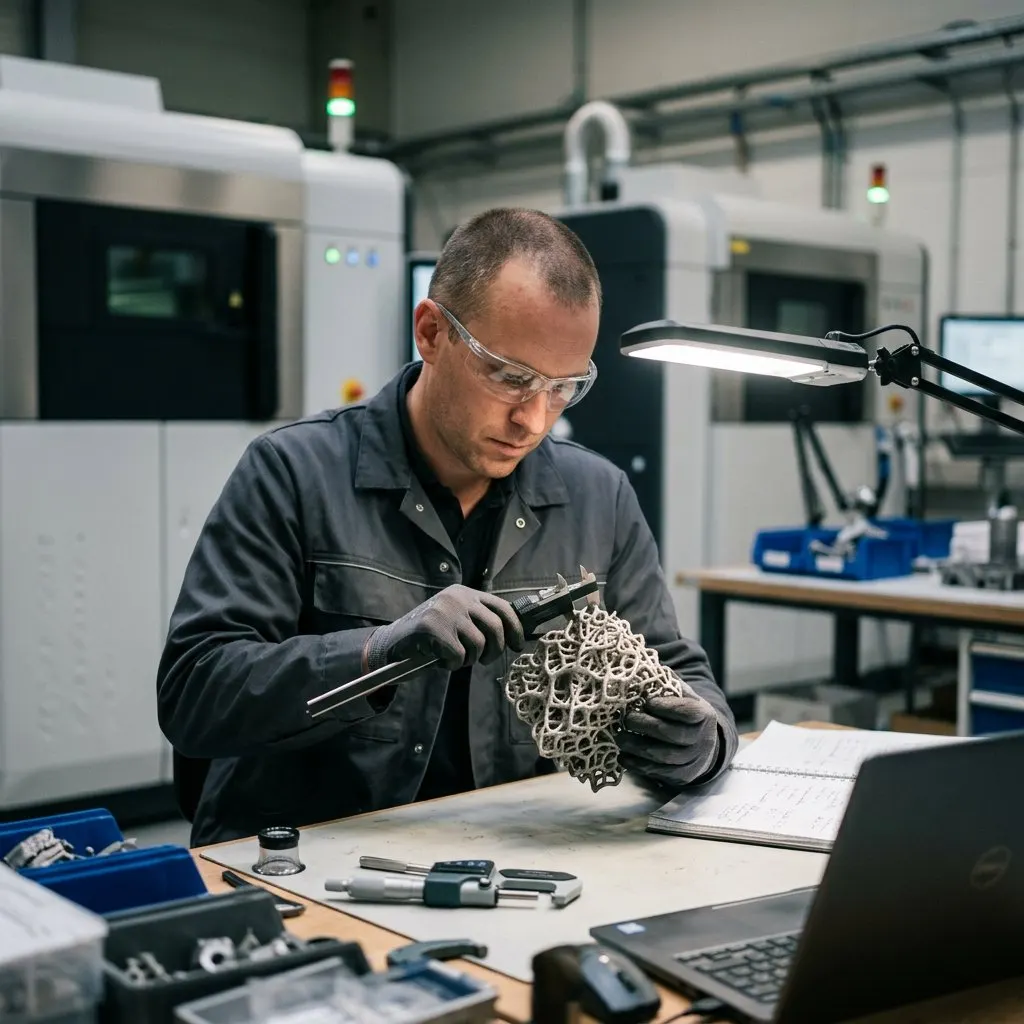
Parts typically go through depowdering, support removal, stress relief, heat treatment, machining or polishing. Binder-based routes add debinding and sintering. The guide says these steps control density, dimensional stability and fatigue performance. Quality control relies on atmosphere control, powder traceability, build records and inspection, with the aim of repeatable output across batches.