What has changed around PA12?
For years SLS meant mostly standard nylon, so engineers often bent the part design to suit the material. The overview describes a broader range today: reinforced powders for more stiffness, elastic grades such as TPU, bio-based Nylon 11 for toughness, variants aimed at surface finish, and niche powders for specific conditions. Much of the progress, it says, comes from tuning the PA12 family through formulation, particle behaviour, filler content and process window rather than replacing it. Filled and specialty grades can demand tighter thermal control and narrower parameter windows.
Why does powder management count as material innovation?
Only part of the powder in a build becomes parts. The rest surrounds them and goes through the machine's heat cycle, which can change flow, sintering response, surface, ductility and consistency. Used powder is therefore not recycled indefinitely and is normally mixed with fresh powder following material and machine guidance. Moisture, storage and sieving add further variation. Two-powder and selective deposition concepts try to reduce waste by placing premium material only where it is needed, but they depend on specific hardware and software.
How should a material be chosen and approved?
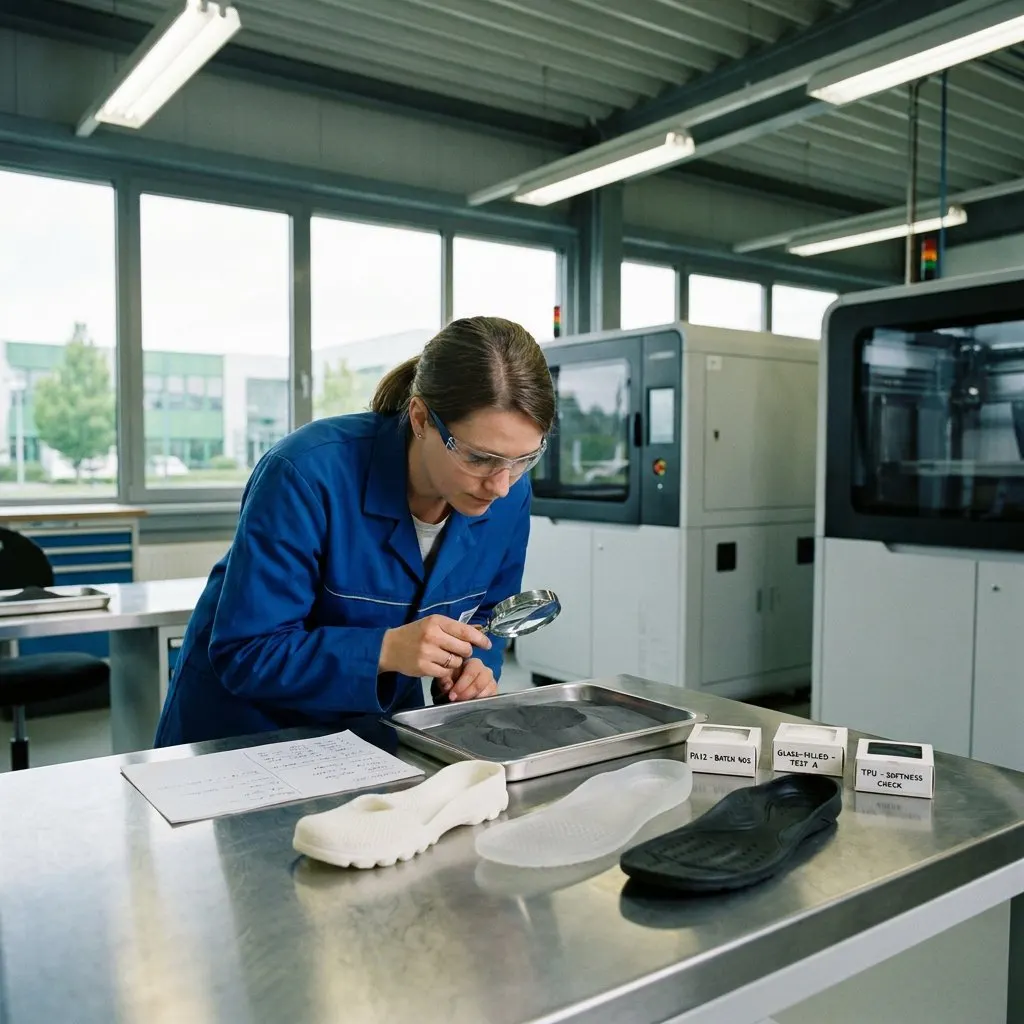
The text recommends starting from the part requirement. Balanced PA12 suits housings, brackets, jigs and snap-fits. Glass-filled PA12 suits rigid covers and fixtures, at the price of toughness and more machine wear. TPU 88A suits seals, grips and wearables. Before release, a new powder should be treated like a process change: confirm compatibility with the exact printer, run trial builds across several jobs including reuse, check post-processing such as dyeing and blasting, and calculate cost per usable part including refresh ratio, losses and labour.