AddiWire

Additive manufacturing news and European prices, with independent expert commentary

Desktop 3D printing

Richmond arts school adds a Bambu Lab H2S and fills its first 3D printing camp

Published 1 sourceDeutsche Version
Richmond arts school adds a Bambu Lab H2S and fills its first 3D printing camp
Image: Bambu Lab

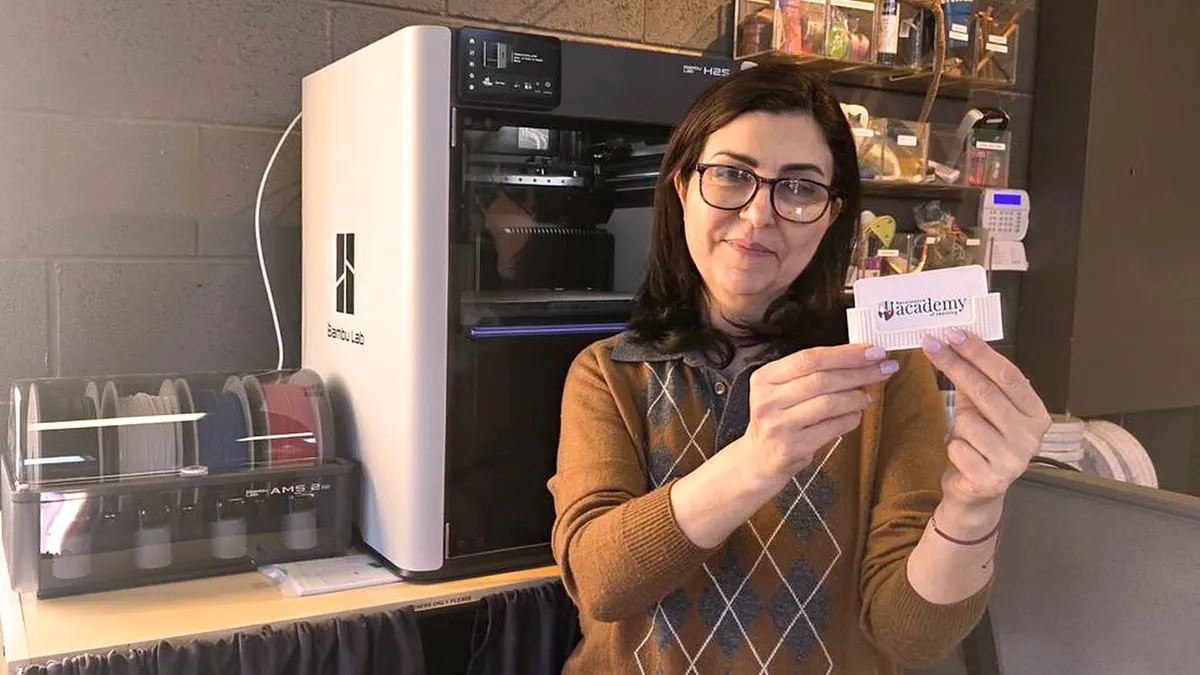
Renaissance Academy of Learning, an arts and education centre in Richmond serving learners from 12 months to adults, has started 3D printing with a single Bambu Lab H2S. Its first summer camp on the topic was fully booked soon after sign-ups opened. The vendor-published case study also describes early technical problems and plans for further printers and curriculum use.

Key facts
  • Starting equipment: one Bambu Lab H2S in a 25,000 square foot building
  • More than 1,000 students and families attend programs each week
  • The 3D Maker's Lab summer camp was fully booked soon after registration opened
  • H2D or H2C and P1S are being considered for later expansion

Why did an arts school buy a 3D printer?

Renaissance Academy of Learning and The Arts Conservatory has operated in Richmond for more than 30 years, with early childhood education, after-school classes, dance, music, visual arts, languages and camps. Engineering and product design rarely featured in everyday lessons. Ideas often stayed theoretical, and prototypes needed outside fabrication services, which slowed experiments. Leadership wanted creativity, engineering, entrepreneurship and problem solving in one place, so students could go from concept to physical object on site.

Why the H2S, and what went wrong early on?

The academy chose the Bambu Lab H2S for its enclosed design, output quality, speed and multi-colour capability, and for its fit with learners of very different ages. Staff were new to the technology. They met Z-axis errors, filament feed trouble, jams and print defects raised by the printer's automatic detection, and the manuals did not always help. The school responded by researching classroom batch printing profiles, print queue management and finishing methods such as sanding, priming and painting.

What are the plans?

The school intends to use printing for teaching aids, prototypes, props, classroom items, art pieces, student-made products and replacement parts for daily operations. Bambu Studio is planned as the software, chosen for its beginner-friendly interface. Longer term, the academy wants 3D design in the core curriculum, a dedicated innovation lab, and possibly additional models such as the H2D or H2C and the P1S. The text comes from the vendor's own blog and reports engagement gains without figures.

What it means

The case is a vendor-written education story, so it says little about industrial adoption. Still, the pattern is familiar to any small company starting out: a single machine, staff without experience, and early time lost to jams and calibration errors. The school's response, building profiles, queue handling and finishing routines, matches what small manufacturers need before output becomes reliable. No cost, utilisation or outcome figures are given, so the business case cannot be assessed from this text.

Frequently asked questions

Which printer did Renaissance Academy of Learning start with?

It began with one Bambu Lab H2S, picked for its enclosed design, speed, output quality and multi-colour capability. The H2D or H2C and the P1S are being considered later.

What problems did the school face?

Staff met Z-axis errors, filament feed problems, jams and print defects flagged by detection, and the manuals did not always cover them. The school began researching better workflows.

What is the 3D Maker's Lab?

It is a summer camp the academy launched around the new printer. It reached full enrollment soon after registration opened.

Read the original reports
  1. Bambu Lab blog, 2 Nov 2026

This summary was written with the help of AI from the linked reports, under the editorial responsibility of Svetozar Kolesar.