Richard Wooldridge, CEO of Raplas Technologies, writes that most disappointing industrial additive manufacturing results come from weak process control rather than weak technology. He names three levers: matching the machine to the application, putting repeatability ahead of speed, and controlling the whole workflow. The piece also promotes the company's own SmartBuild software and PR series printers.
Is desktop equipment the problem when scaling up?
Wooldridge says many firms start on desktop machines, which suit learning and concept work. Trouble appears when the same systems are pushed into production: warping, layer separation, dimensional errors and uneven surface quality. In his view this is usually a mismatch between what the application needs and what the machine can deliver, not a flaw of the technology.
Why repeatability outranks speed
One good part is easy, he argues; the same part to the same specification hundreds of times is hard. Machine behaviour, environment, material and job setup all add variation. Rigidity, thermal stability and process control are unglamorous specifications, yet they separate stable production from erratic results.
Process control and the Raplas offer
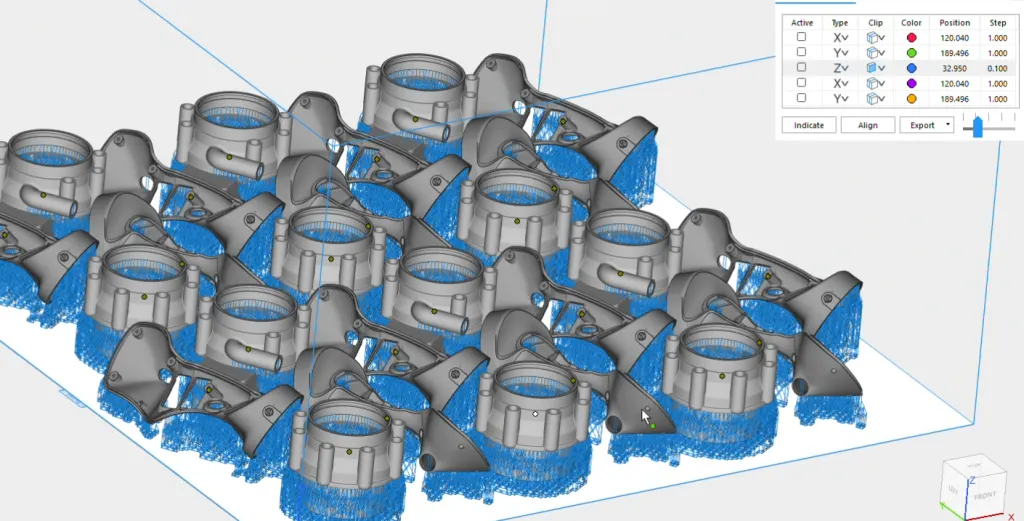
Failures such as poor support placement, parts that miss inspection tolerances or materials that underperform in service are not fixed by hardware alone, he writes. Raplas developed SmartBuild with Materialise to make job setup more uniform and cut operator-to-operator differences. Its PR series uses a granite structure and controlled conditions to limit variation.
What it means
The piece is vendor opinion with a product pitch, but its core point holds for small and mid sized EU manufacturers: a business case rests on stable yield, not on peak machine specifications. Buyers should ask for evidence of repeatability, documented workflows and validated materials before comparing speed or price. Qualification and skills follow the same logic, since a process nobody owns cannot be certified. No new data is presented, so treat the claims as a checklist rather than proof.
Frequently asked questions
What does Raplas say causes most industrial 3D printing failures?
Wooldridge attributes them mainly to process shortcomings, such as a poor match between machine and application and weak control of the workflow, rather than to the technology.
What is SmartBuild?
It is build preparation software Raplas developed with Materialise to make support strategies and job setup more uniform and reduce differences between operators.