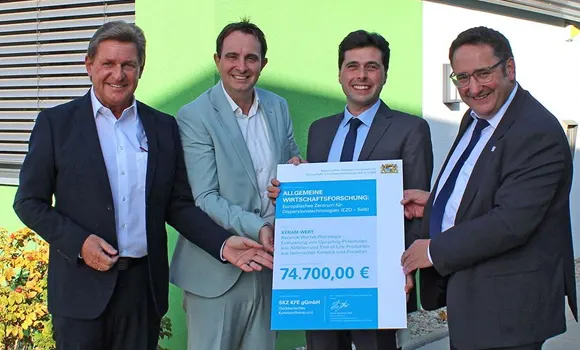
The KERAM-WERT project at the European Centre for Dispersion Technologies in Selb, Germany, is testing whether ceramic scrap can be turned into material for additive manufacturing. It runs from 1 July 2026 to 28 February 2027 with nearly EUR 75,000 of Bavarian state funding. A regional survey counts more than 1,000 tonnes of ceramic waste per year in the Fichtel Mountains.
Key facts
Project runs 1 July 2026 to 28 February 2027 at EZD in Selb
Funding: nearly EUR 75,000 from the Bavarian economics ministry
Survey finds over 1,000 tonnes of ceramic waste per year in the Fichtel Mountains
First waste streams identified and material samples already received
Context Secondary raw materials are feedstocks made from recovered waste instead of newly produced powders or slurries.
What does the project examine?
The EZD wants to record production scrap and end-of-life products from technical ceramics and porcelain, and assess their material properties. The aim is to make them usable as secondary raw materials, especially for additive manufacturing. A regional recycling approach for the Fichtel Mountains is the intended outcome.
Why does it matter regionally?
Officials quoted in the announcement link the work to the circular economy and to less dependence on global supply chains for the local ceramics and porcelain industry.
What it means
This is early-stage, short research, not a material that buyers can order. For small ceramic AM users in the EU, recycled feedstock could eventually lower powder or slurry costs and ease supply, but only if the recovered material meets consistent quality. Qualification of such feedstock is not addressed in the report, so realistic production use lies well beyond the project's end in February 2027.
Frequently asked questions
How long does KERAM-WERT run and who funds it?
It runs from 1 July 2026 to 28 February 2027. The Bavarian State Ministry for Economic Affairs, Regional Development and Energy provides nearly EUR 75,000.
How much ceramic waste is involved?
A survey within the project indicates more than 1,000 tonnes of ceramic waste per year in the Fichtel Mountains.