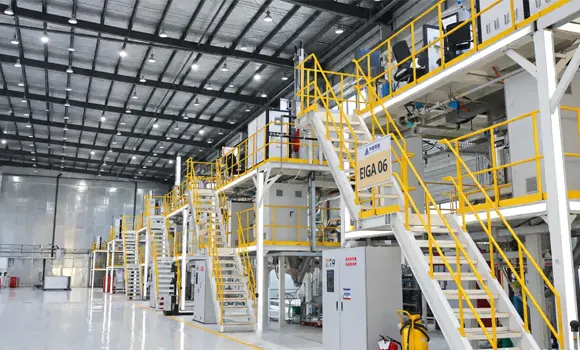
Beijing-based Avimetal is presenting titanium powder made entirely from recycled coarse powder and machining scrap at Formnext 2026, together with its MT400M metal printer. The company reports 1,800 tonnes of annual capacity and says the powder is already supplied in volume to consumer electronics makers.
How is the recycled powder made?
Avimetal recycles Ti-6Al-4V coarse powder and titanium machining scrap. The route covers powder recovery, oxygen control, EIGA atomisation, sieving and inspection, and the company reports a 100% regeneration rate. Particle sizes are 0 to 20 µm and 15 to 53 µm, for PBF-LB and metal injection moulding. Avimetal says batch-to-batch consistency is comparable to virgin atomised powder.
What about the machines?
The MT400M and MT400S series offer multi-laser setups, 60 and 80 µm spot sizes, ring beam shaping and thicker layers. Avimetal reports full-plate runs of 24 automotive brackets in 144 hours and 2,248 phone hinge shaft caps in 60 hours. The MT400M runs live at Hall 11.0, stand D21.
What it means
Recycled titanium powder could lower material cost, a major share of metal AM part cost, but the figures are the vendor's own. European buyers working under aerospace or medical rules would need independent powder characterisation and lot traceability before accepting recycled feedstock. The cited volume use is consumer electronics, a less regulated field. Machine claims such as build times come from validation by the company itself and are not independently tested.
Frequently asked questions
What capacity does Avimetal report for recycled Ti-6Al-4V powder?
The company reports 1,800 tonnes per year, with particle sizes of 0 to 20 µm and 15 to 53 µm.
Where is the powder used today?
Avimetal says it is supplied in volume mainly for lightweight precision parts in global consumer electronics.