How is the A$6 million placement structured?
Aurora Labs (ASX: A3D) is issuing about 109.1 million new shares at A$0.055 each, a 6.77% discount to the last trading price of A$0.059 on 23 October 2026. The first tranche of A$4.565 million (83 million shares) is expected to settle on 2 November, with allotment on 4 November. The second tranche of A$1.435 million (about 26.1 million shares) needs shareholder approval at a general meeting planned for mid-January 2027.
Non-Executive Chairman David Trimboli contributes A$550,000. Walkinshaw Group Holdings, part of an Australian engineering group known for automotive development and production, made a strategic investment. No lead manager was appointed; participating brokers receive 7.5 million options and cash fees of about A$213,000.
What will the money be used for?
Aurora plans to expand its turbojet production lines, buy commercial off-the-shelf metal additive manufacturing equipment, finalise production data packs and hire staff for the move to full-scale production. Funds also cover business development, IP protection, maintaining AS9100D aerospace certification, data rooms and working capital.
The company will talk with Walkinshaw about future production support and metal additive manufacturing. 3DPrint.com reports that Aurora might also provide metal AM services to Walkinshaw.
Why is Aurora buying machines instead of building its own?
Aurora developed its own laser powder bed fusion technology. According to 3DPrint.com, in June 2026 it said it would use its own printers for research and development and rely on industrial printers from other manufacturers for volume production. A matched A$2 million investment, including a A$1 million government grant, was meant to buy a large-format industrial metal printer for its Canning Vale site in Western Australia.
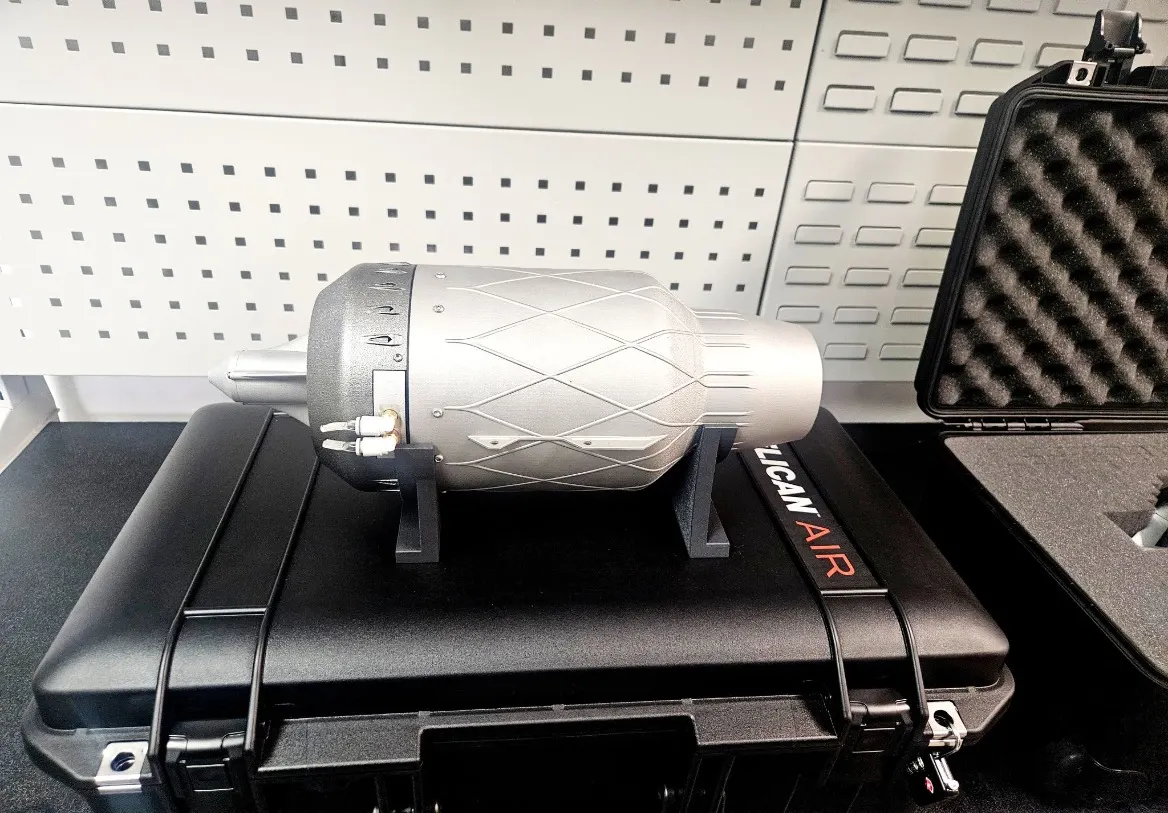
The AU4 produces up to 400 newtons of thrust and weighs about 3.9 kg with its fuel pump. In March 2025 Aurora reported removing 40 parts through redesign, 23 in the casing and 17 in the combustion chamber, and a 6% fuel consumption reduction. Machining and bought-in components are still used.
What is the commercial position?
On 22 October Aurora announced its first US sale: three AU4 engines and integration services for US$42,000, for an experimental aircraft programme. It also holds an A$250,000 order for 20 AU4 systems from Sovereign Propulsion Systems, a teaming agreement with MBDA and AS9100D certification from August 2026.
For the year to 30 June 2026 Aurora reported revenue of A$564,218 and a net loss of A$5.1 million, with about A$2 million in cash. The new funding therefore supports both expansion and operations.