AddiWire

Additive manufacturing news and European prices, with independent expert commentary

Companies

US Army

Aerospace and defence

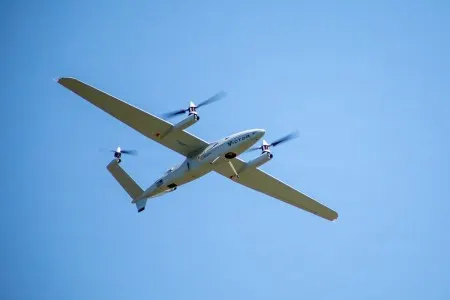
US Army flies a printed heavy-fuel Wankel engine in its VICTOR hybrid drone

The US Army research laboratory DEVCOM ARL has flown a hybrid propulsion unit whose heavy-fuel rotary engine was made with metal 3D printing. The engine drives a generator that feeds an electric system, and it flew in the VICTOR drone, a Group 3 unmanned aircraft built with Griffon Aerospace. The Army calls it the first 3D printed heavy-fuel engine; results now pass to industry partners and to the planned PULSAR drone concept.

The headline says printed engine, but one of the reports calls it only partly made additively, and none says which parts. For a European engine or drone supplier, that distinction matters most. Printing used to shorten design loops is a development tool. Printing that stays in flying hardware is a qualification commitment, with military airworthiness rules attached. In an air-cooled rotary engine, the housings take repeated thermal cycling, and in my experience fatigue on as-built surfaces is where printed metal parts often fall short of datasheet values. Before treating this as a template, I would ask which components stay printed in the design meant for series, in which alloy and heat treatment condition, and with what fatigue evidence. Until the design stops changing, buying fast iterations from a qualified metal service provider usually makes more sense than buying a machine.
Commentary by Svetozar Kolesar
3 sources
Aerospace and defence

US Army trials 3D printed facade panels to insulate an existing building

The US Army is testing a retrofit of an existing building at the Detroit Arsenal in Michigan using additively manufactured facade elements. The project is funded through the Environmental Security Technology Certification Program (ESTCP). It is meant to show whether existing buildings can be insulated afterwards without extensive work inside, with the aim of cutting the energy needed for heating and cooling.

1 source