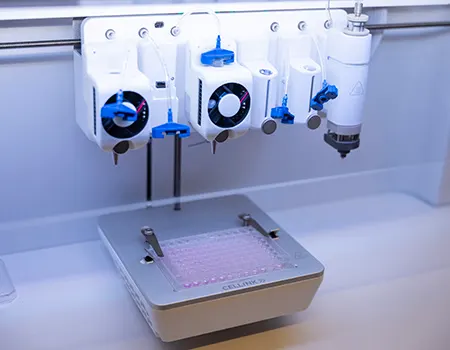
How are the tumour models made?
Working with the U.S. Department of Veterans Affairs, the team collects tissue from biopsies or surgery and separates it into single cells. A specialised bioprinter places droplets containing these cells into a hydrogel, forming tumoroids, which are miniature living versions of the original tumour.
What makes the platform different?
According to the UC Davis Comprehensive Cancer Center, the models also keep immune cells and stromal cells, the tissue that surrounds and supports a tumour. This tumour microenvironment influences how a tumour grows and responds to drugs. The platform is designed for high-throughput work, so many models can be made and used to test drugs and drug combinations.
What has been found so far?
The team also built an AI system that analyses patient data to propose potentially effective drugs, and the printed tumoroids serve as a living test of those predictions. Some drugs expected not to work showed promising results, and some lab results differed from what the tumour's molecular makeup suggested. Work has focused on prostate and bladder cancer, with further studies on kidney, lung, liver, and head and neck tumours.
What is still open?
The platform remains in research. The team hopes to start clinical trials but has announced no timeline. Open questions are whether a patient's real drug response matches the result in the printed tumour, and whether the process is fast enough to inform treatment decisions.