How did the show compare with earlier years?
According to the commentary, Formnext 2026 used one fewer exhibition hall, with some companies absent and around 300 new exhibitors joining. Early opinion called it a good show for both selling and meeting. Fewer newcomers attended, but many visitors were scaling up and investing, and most knew what they were looking for. The author expects features, cost savings and effectiveness, plus training, peripherals and implementation, to matter more than application showcases.
Why are DED and LFAM getting more attention?
The author argues that DED and LFAM are growing fastest in missile defence, oil and gas and maritime work, where parts are far larger than the typical 40 by 40 by 40 centimetre build box. Pressure vessels are named as a strong DED application and boats as one for LFAM. Much of this work is said to happen out of sight, for example an oil company buying a robot for printing from a local integrator. Drone boats are expected to raise awareness further.
What is happening in software and desktop manufacturing?
Much funding is going to AI CAD startups, and the author thinks more than 150 of them may not survive. More durable use of AI is seen in process data, settings and yield optimisation. PanX, Euler and Phase3D are cited, and Nikon SLM Solutions and EOS are opening their machines to software firms such as Dyndrite. The author also points to well-funded desktop machines such as UV flatbed printers, CNC machines and laser cutters, some with over 100 million in funding.
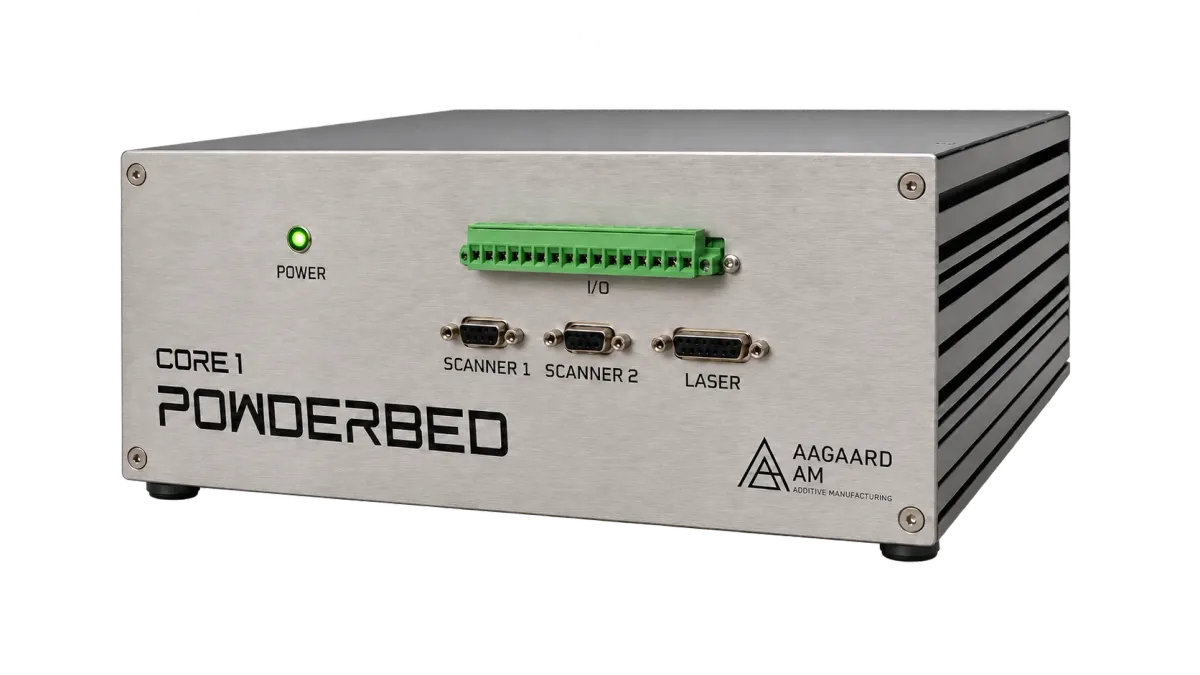
What is Powderbed's CORE1?
Powderbed is a one-person company whose CORE1 combines scanner, laser controller, software and hardware. It is meant to let machine builders skip the basics when developing an LPBF or other system. The author sees it as a force multiplier and a model built on earning money rather than venture capital.