AddiWire

Additive manufacturing news and European prices, with independent expert commentary

Business

California sues filament maker Polymaker over alleged marketing to ghost gun makers

Published 1 sourceDeutsche Version
California sues filament maker Polymaker over alleged marketing to ghost gun makers
Image: Polymaker

San Diego County Counsel filed a civil suit on October 5, 2026, on behalf of California against Polymaker, a major filament producer based in Shanghai with US operations in Houston. The complaint argues that the company's marketing turned ordinary PLA into a regulated firearm precursor part. The outcome could affect how material and hardware suppliers are held liable for what customers print.

Key facts
  • Civil complaint filed October 5, 2026 in San Diego County Superior Court
  • Defendant: Polymaker LLC, Shanghai headquarters, US operations in Houston
  • Complaint runs 39 pages and names Sean Aranda 65 times
  • Filed by San Diego County's new Consumer Fairness and Public Protection Division

What does the complaint allege?

The 39-page complaint, filed in San Diego County Superior Court, accepts that filament is lawful. Its argument is that Polymaker marketed the product in a way that appeals to gun enthusiasts. California law treats an article marketed to the public for use as the frame or receiver of a working firearm as a firearm precursor part. The county asks for the return of profits, civil penalties and a court order restricting the company's conduct.

Why is Sean Aranda central to the case?

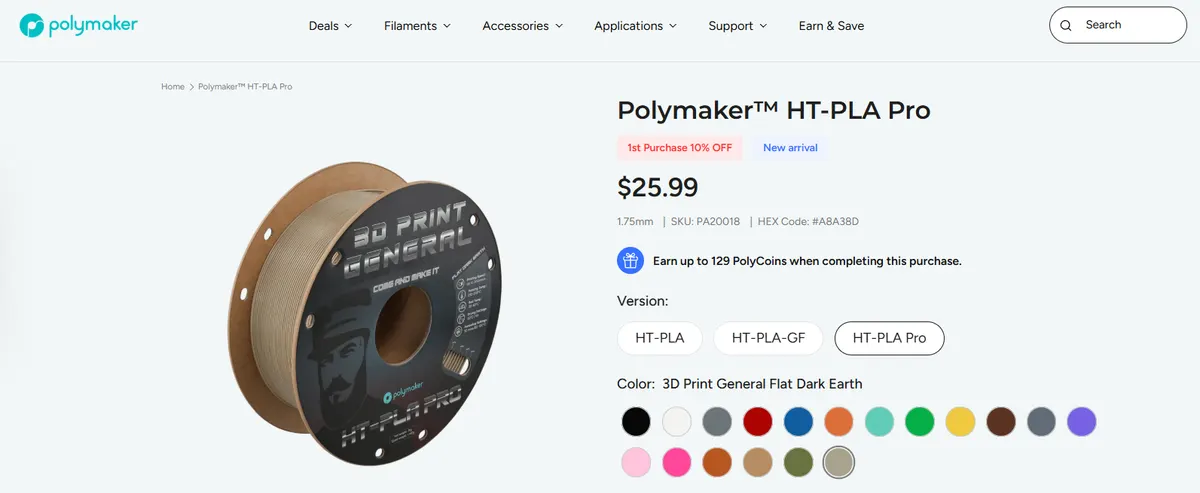
Aranda, known online as The 3D Print General, lost his YouTube channel in 2023 over firearm policy violations. Polymaker had sponsored him with a special khaki PLA Pro spool and then hired him as Head of Customer Experience, where he worked on community building and events. He now works as a senior technical account manager. He is named 65 times in the complaint, which implies he was hired for his ties to the ghost gun community.

What role do affiliate links play?

Prosecutors point to affiliate links, a standard creator tactic that pays a small share of sales. Polymaker's public application form asks for name, location and follower counts, but not for the type of content a creator makes.

Why could it matter beyond firearms?

The suit comes from San Diego County's new Consumer Fairness and Public Protection Division. Tom's Hardware notes that if a Texas-based supplier can be held liable in California for a customer's lawful out-of-state activity, material makers, software developers and hardware vendors could all face similar exposure.

What it means

For manufacturers using additive manufacturing, this is mainly a supply chain and compliance signal, not a technical one. If marketing and community activity can reclassify a generic material, suppliers may tighten sponsorship, affiliate and distribution rules, which could affect terms for resellers and service bureaus. European SMEs selling into the US should watch how courts treat cross-state liability. The case is at filing stage, so timelines are long and no ruling is near.

Frequently asked questions

Is 3D printing filament illegal in California?

No. The complaint itself acknowledges that filament is not illegal. The claim concerns how Polymaker allegedly marketed it.

What does the county want from Polymaker?

It asks for the return of profits, civil penalties and injunctive relief.

Who is Sean Aranda?

He is a 3D printing author and gun enthusiast known as The 3D Print General, banned from YouTube in 2023, who Polymaker sponsored and later employed.

Read the original reports
  1. Tom's Hardware 3D printing, 11 Oct 2026

This summary was written with the help of AI from the linked reports, under the editorial responsibility of Svetozar Kolesar.